
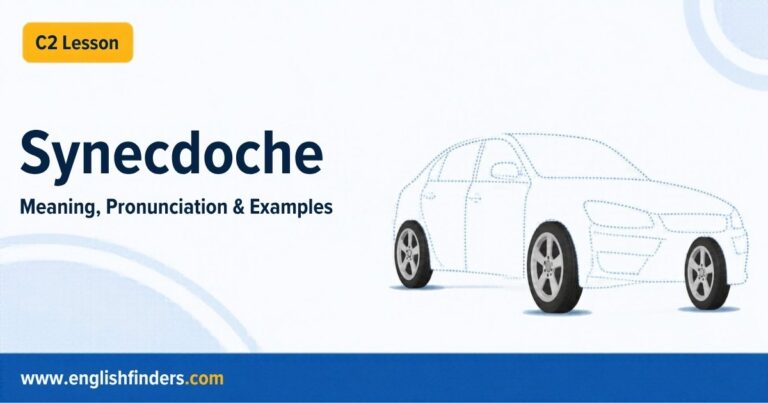
Synecdoche uses a part to mean the whole, or the whole to mean a part. Learn how to say it, its types, everyday examples and how it differs from metonymy...

Metonymy names something by a closely linked thing, like “the White House” for the US president’s team. Learn its types, examples and how to read it in news...

Figures of speech use words in non-literal or patterned ways. Learn tropes vs schemes, 20 common types with examples, and phrases for analyzing them in essays...
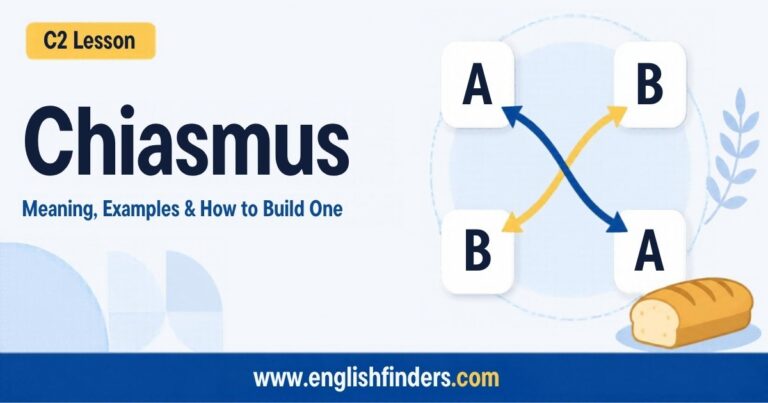
Chiasmus reverses the order of words or ideas in two matching halves (A B, B A). Learn how to say it, famous examples and how it differs from antimetabole...
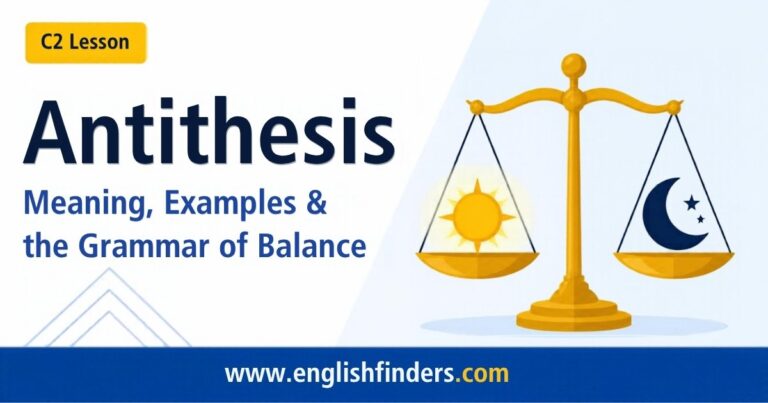
Antithesis sets opposite ideas in balanced sentences. Learn its meaning, pronunciation, real examples and grammar patterns, then practice with answers...
Anaphora repeats words at the start of clauses for rhythm and emphasis. Learn its meaning, pronunciation, famous examples, its grammar sense and how to use it...
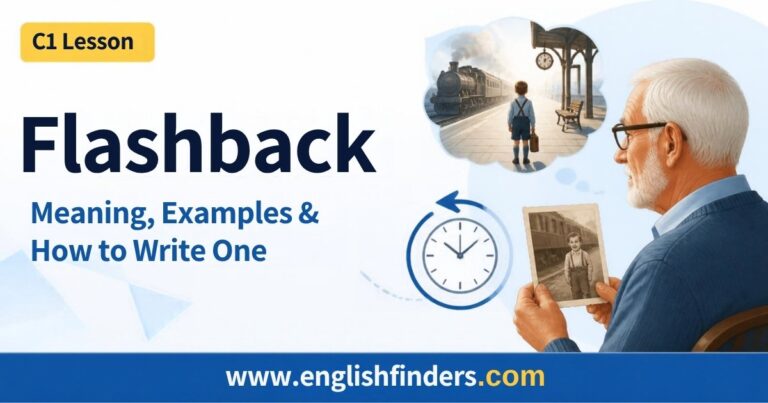
A flashback is a scene that goes back to an earlier time in a story. Learn the meaning, types and famous examples, plus the grammar to write one...
Circular reasoning uses the conclusion as its own proof. Learn what the fallacy is, clear examples, what “begging the question” means and how to fix it...
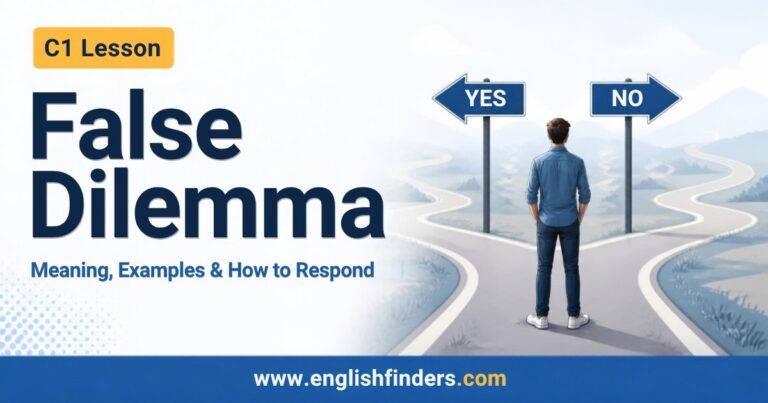
A false dilemma presents only two choices when more exist. Learn the false dilemma fallacy, its other names, everyday examples and how to find a third option...