
The Garden on the Roof
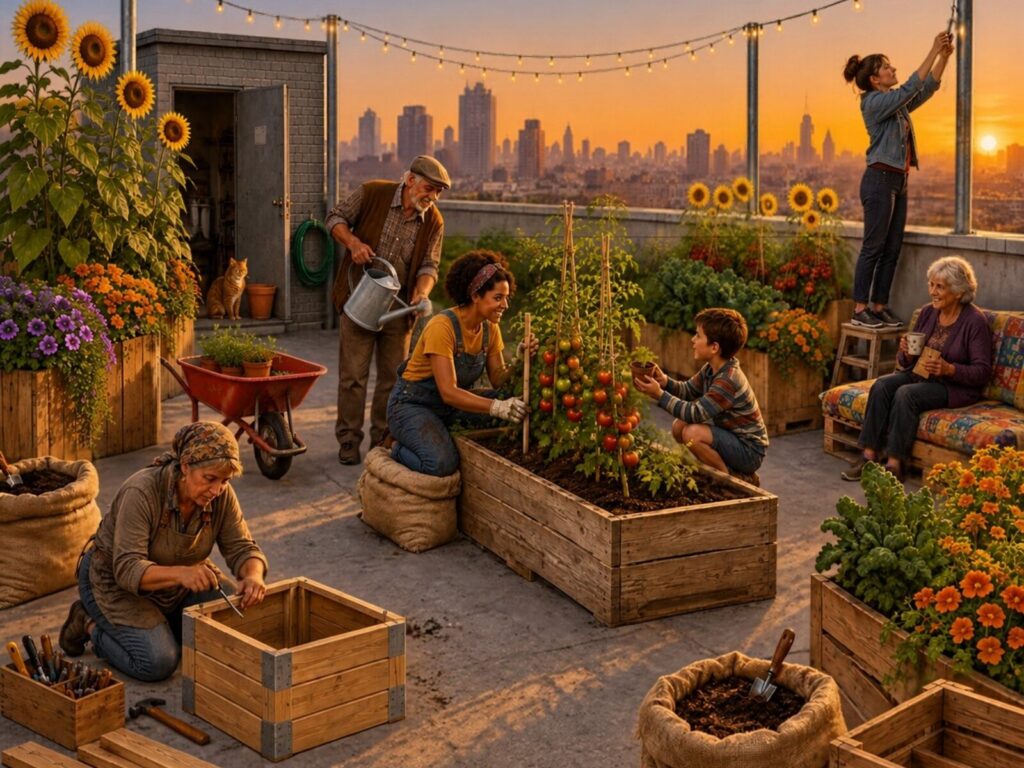
Zara had lived on the ninth floor of Clifton House for four years, and she knew the names of exactly two of her . The building was grey, the lift was usually broken, and people kept their eyes on the floor when they passed each other on the stairs. Her mother called it “a place to sleep, not a place to live”.
One afternoon in March, while she was looking for her bicycle pump in the storage room, Zara found an old metal key with a label on it: . Out of curiosity, she climbed the last flight of stairs and tried it in the heavy door at the top. It opened.
The roof was flat, dirty and covered in old leaves. But the view was incredible. She could see the whole city, the river and, on a clear day, the hills beyond it. And the roof got sun all day long.
Zara was sixteen, and she had never grown anything in her life. But she had seen videos of gardens on city rooftops, full of vegetables and flowers, and she thought: why not here?
The first problem was . The building belonged to the city council, and the woman on the phone said she needed a written plan and the support of at least ten residents. Zara spent a week knocking on doors. Some people didn’t open. Some said it was a waste of time. But an old man on the third floor, Mr Osei, who had been a farmer in Ghana, listened carefully and signed immediately. “I have been waiting thirty years for someone to ask,” he said. With his help, she got fourteen signatures.
In May, the council said yes. Zara bought with her birthday money: tomatoes, beans, lettuce and sunflowers. The local garden centre gave them some old wooden boxes, and a builder who lived on the sixth floor carried bags of up nine floors because the lift was broken again.
Every Saturday, more people came up to the roof. A family from the fourth floor brought chilli plants. Two students made a rain collector from old bottles. A woman who never spoke to anyone turned out to know everything about strawberries. Mr Osei came every day, sitting on a plastic chair and giving advice to anyone who would listen.
By August, the roof was green. They had their first : baskets of tomatoes, beans and enormous lettuces. Someone suggested a dinner, and that evening forty residents sat together on the roof, eating food they had grown themselves while the sun went down over the city.
Now there is a list of on the noticeboard in the entrance hall, and a waiting list for the boxes. People say hello on the stairs. Zara’s mother still complains about the lift, but she doesn’t call Clifton House a place to sleep any more.
She calls it home, and the roof is where the meets.
Words from the Story
- roof noun A2
- the flat or sloping top of a building
- seed noun A2
- a small part of a plant that grows into a new plant when you put it in the ground
- soil noun B1
- the earth that plants grow in
- permission noun A2
- when someone in charge says you are allowed to do something
- neighbour noun A1
- a person who lives near you, for example in the same building
- harvest noun A2
- the time when you collect fruit and vegetables that are ready, or the food you collect
- volunteer
- a person who does a job without being paid, because they want to help
- community noun B2
- the people who live in one place, thought of as a group
Check Your Understanding
- What was life in Clifton House like at the start?
- How did Zara get onto the roof?
- What did the council need before saying yes?
- Why was Mr Osei important to the garden?
- How has the building changed by the end?