Grammar

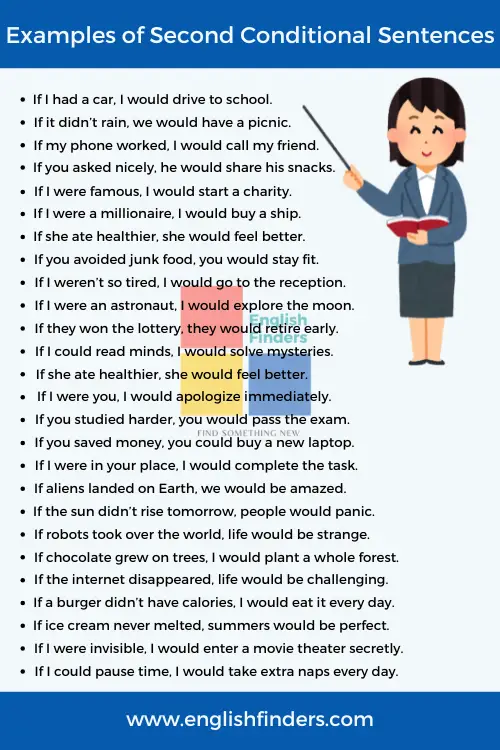
Examples of Second Conditional Sentences

Second Conditional Sentences: 50 Example Sentences

The second conditional sentences are all about hypothetical or unreal situations in the present or future. For example, you might say, “If I had a magic wand, I would make all my homework disappear!” Sounds fun, right? In this lesson, we’ll dive into 50 examples of second conditional sentences that will not only help you

Second Conditional Sentences: 50 Example Sentences Read More »
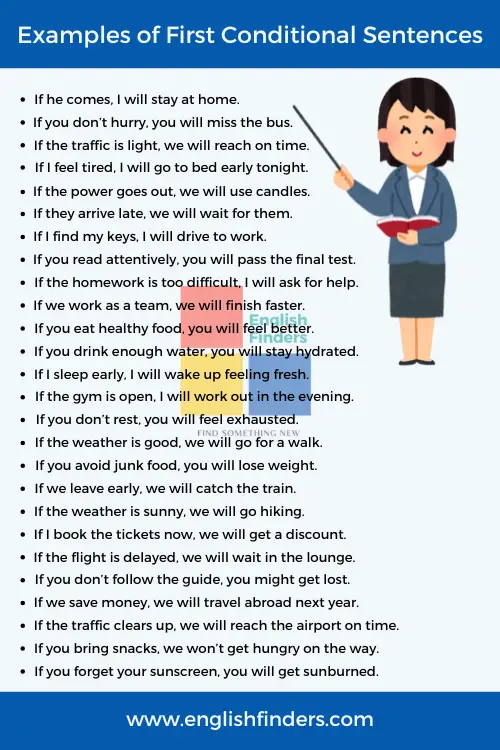
Examples of First Conditional Sentences

First Conditional Sentences: 50 Example Sentences

Conditional sentences are essential parts of the English language. They help us to talk about possibilities, and plans and even give advice. Among the four types of conditional sentences, the first conditional sentence is the most useful because it describes real and possible situations in the future. So, what is the first conditional? In short,

First Conditional Sentences: 50 Example Sentences Read More »
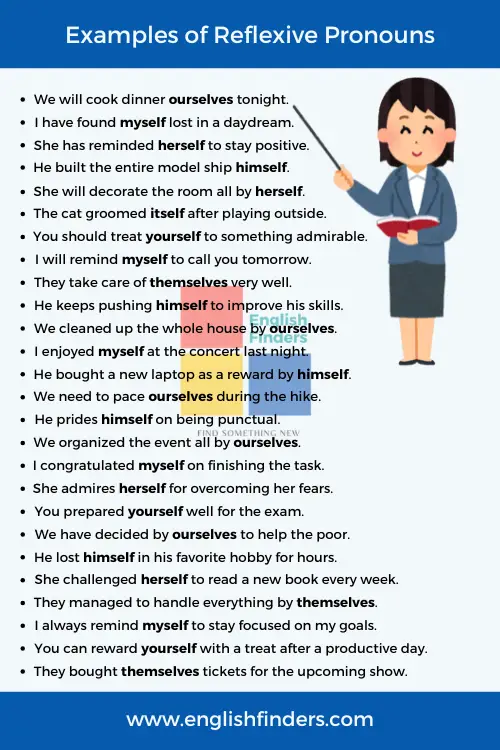
Examples of Reflexive Pronouns

What is a Reflexive Pronoun? | 50 Examples of Reflexive Pronouns

You might have come across words like myself, yourself, or themselves before. These are examples of reflexive pronouns, and they serve a unique role in our sentences. So, what is a reflexive pronoun in English? In this lesson, we’ll unveil the definition of a reflexive pronoun and look at when and how to use reflexive

What is a Reflexive Pronoun? | 50 Examples of Reflexive Pronouns Read More »

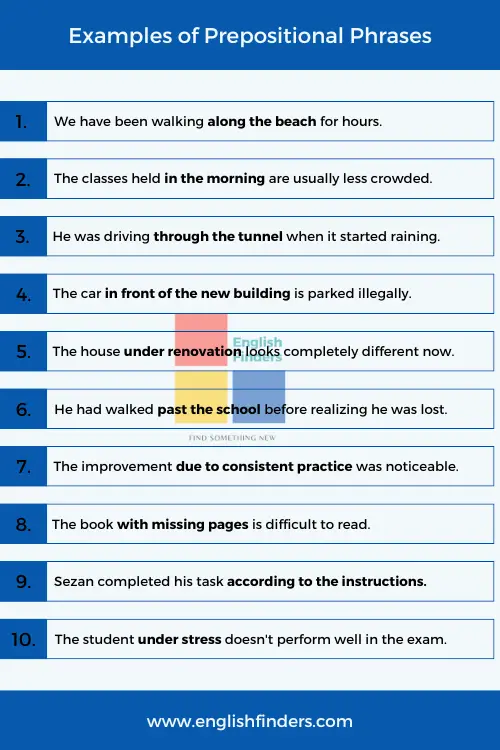
50 Examples of Prepositional Phrases

50 Examples of Prepositional Phrases

Prepositional phrases might sound complicated, but they’re actually very common in our everyday English. You probably use them all the time without even realizing it! A prepositional phrase is simply a group of words that starts with a preposition (like in, on, or at) and ends with a noun or pronoun. These phrases help us

50 Examples of Prepositional Phrases Read More »

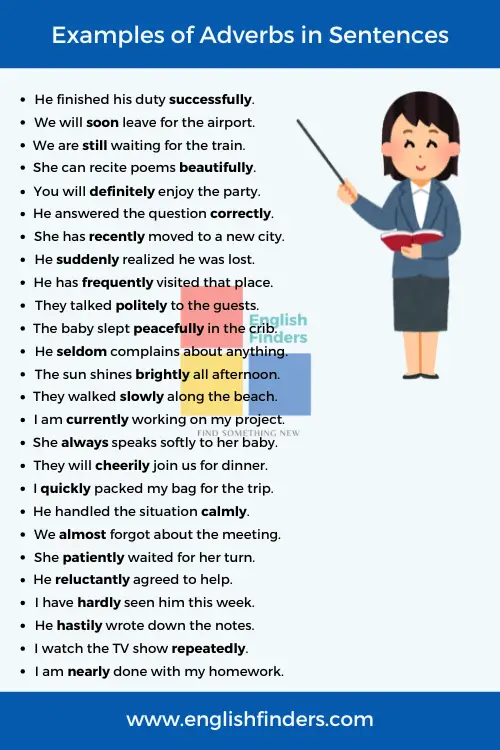
100 Examples of Adverbs in Sentences

100 Examples of Adverbs in Sentences

An Adverb is an essential part of speech in English grammar. It helps us to describe how, when, where, or to what extent an action happens. In other words, they add extra details to verbs, adjectives, or even other adverbs, making sentences more descriptive and interesting. For example, in the sentence, “She runs quickly,” the

100 Examples of Adverbs in Sentences Read More »

Scroll to Top