
Assonance: Meaning, Examples and How to Hear It
Assonance is the repetition of vowel sounds in nearby words. Learn how to hear it when spelling misleads you, examples from poems and how it differs from rhyme.
Assonance is the repetition of vowel sounds in nearby words. Learn how to hear it when spelling misleads you, examples from poems and how it differs from rhyme.

Zeugma uses one word in two senses at once, as in “He caught a cold and the last train.” Learn its meaning, famous examples and when it becomes a mistake.
Zeugma: Meaning, Examples and the Verbs That Make It Work Read More »

Satire uses humor, irony and exaggeration to criticize people, ideas or society. Learn its meaning, three types, famous examples and the language signals.
Satire: Meaning, Types, Examples and How to Spot It Read More »
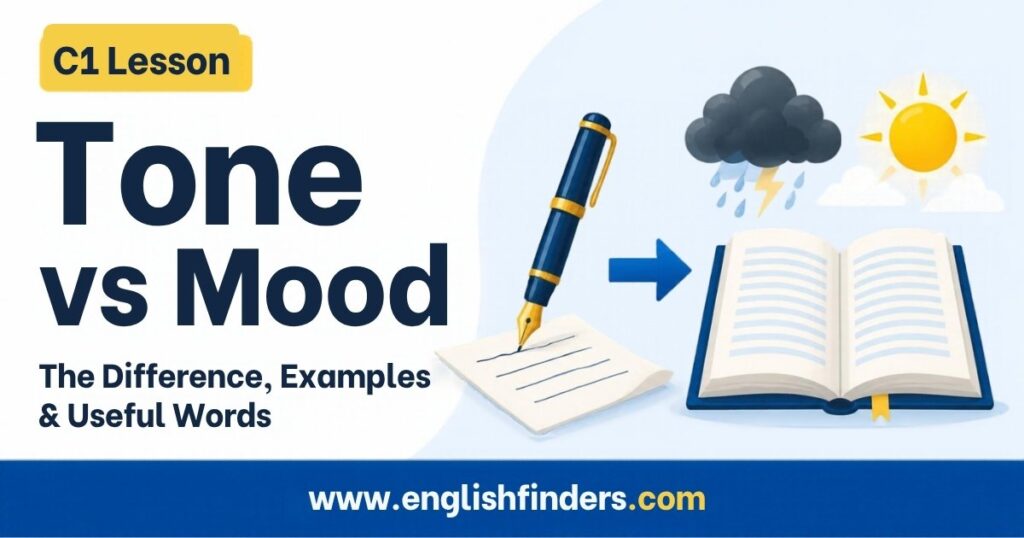
Tone vs mood: tone is the writer’s attitude, mood is the feeling the reader gets. Learn the difference, real examples and adjectives to describe both.
Tone vs Mood: The Difference, Examples and Useful Words Read More »

Figures of speech use words in non-literal or patterned ways. Learn tropes vs schemes, 20 common types with examples, and phrases for analyzing them in essays.
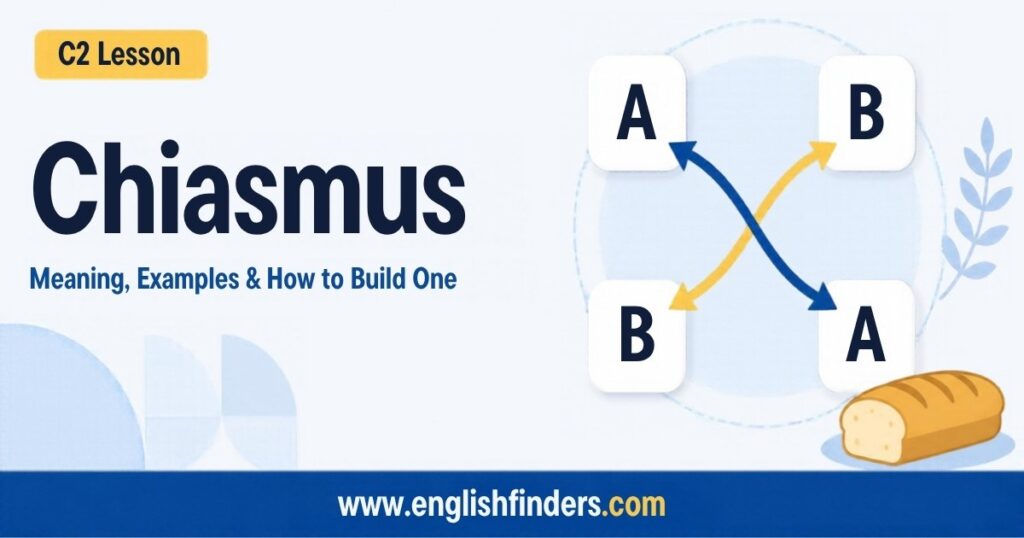
Chiasmus reverses the order of words or ideas in two matching halves (A B, B A). Learn how to say it, famous examples and how it differs from antimetabole.
Chiasmus: Meaning, Examples and How to Build One Read More »