
Alliteration repeats the first sound of nearby words, as in “busy bees.” Learn its meaning, examples from ads and poems, and why sound beats spelling...

An analogy explains something new by comparing it to something familiar. Learn its meaning, examples, analogy vs metaphor, and the phrases to build your own...
Hyperbole is exaggeration on purpose, like “I’ve told you a million times.” Learn how to say it, everyday and literary examples, and the grammar that builds it...
Assonance is the repetition of vowel sounds in nearby words. Learn how to hear it when spelling misleads you, examples from poems and how it differs from rhyme...

Zeugma uses one word in two senses at once, as in “He caught a cold and the last train.” Learn its meaning, famous examples and when it becomes a mistake...
Dramatic irony is when the audience knows something a character doesn’t. Learn its meaning, examples from plays and films, the 3 types of irony and key phrases...
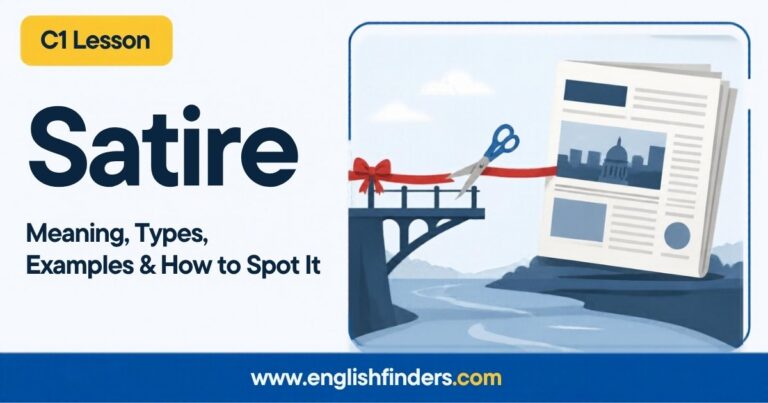
Satire uses humor, irony and exaggeration to criticize people, ideas or society. Learn its meaning, three types, famous examples and the language signals...
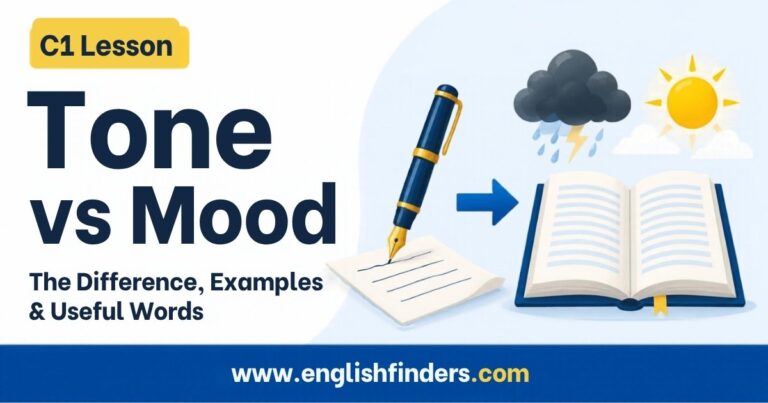
Tone vs mood: tone is the writer’s attitude, mood is the feeling the reader gets. Learn the difference, real examples and adjectives to describe both...
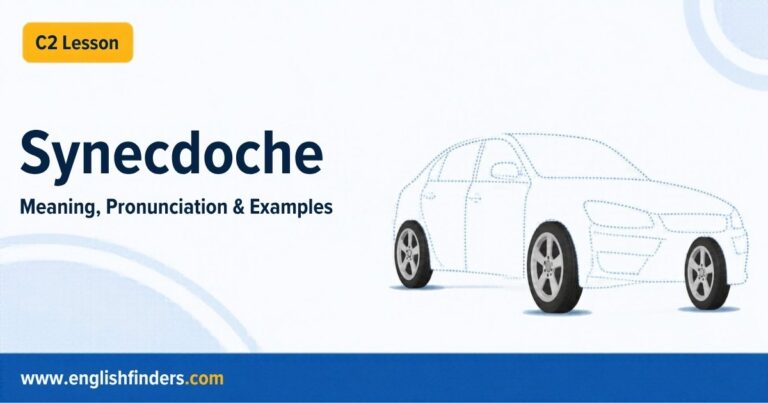
Synecdoche uses a part to mean the whole, or the whole to mean a part. Learn how to say it, its types, everyday examples and how it differs from metonymy...