

Last updated on September 28th, 2026 at 11:34 am
Choosing the right app makes a big difference when you start learning a new language.
When I first decided to learn German, I was both excited and nervous. I wanted a flexible and fun way to study, so I started looking for a language learning platform that could fit into my daily routine. This is how I came across Babbel.
In this Babbel review, I’ll walk you through everything you need to know about Babbel.
I’ll share my honest experience using it to learn German, as well as what it is, how it works, what languages it offers, the pros and cons, and even how much it costs.
What is Babbel?
Quick Navigation
Babbel is an easy-to-use language learning app that helps you speak and understand a new language in a practical way. It was founded in Berlin in 2007, and millions of people around the world have used it since then.
Babbel is special because it focuses on real-life conversations instead of just memorizing random words. The lessons are short, usually around 10–15 minutes, and real language teachers design them. That means you’re learning useful words and phrases that you’ll actually use in everyday situations.
Babbel also mixes in grammar tips, speaking practice, and review games to help you remember what you’ve learned. Whether you’re learning for travel, school, or fun, it gives you a simple way to grow your skills one step at a time.
My Personal Experience Learning German with Babbel
When I first signed up for Babbel, I was curious to see how well it could help me start speaking German.
The journey began with a quick placement test, which helped the app figure out my level. Since I was a complete beginner, it placed me right at the start, which I appreciated—it didn’t overwhelm me with advanced words or grammar.
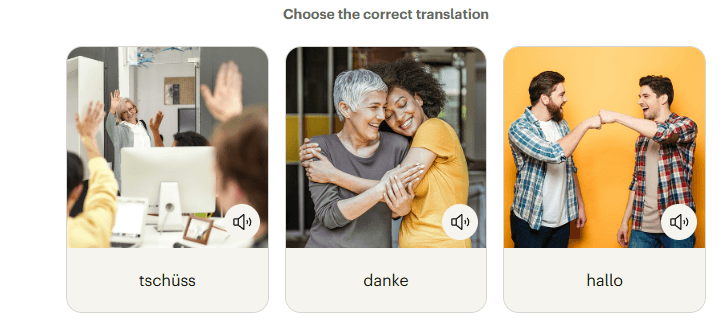
After the placement test, I started Unit 1, Lesson 1: “Greet people and say goodbye.” It began with basic greetings such as “hallo,” “danke,” and “tschüss.” These words felt strange at first, but Babbel made them easy with clear audio and pictures.
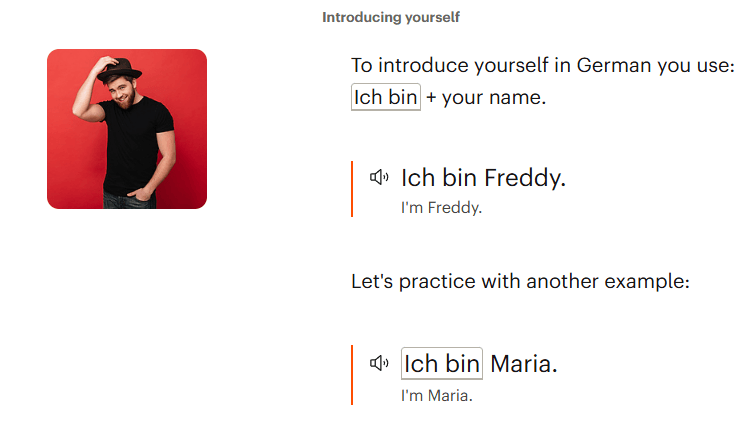
The “introducing yourself” part was my favorite. I learned how to greet people and introduce myself with the right words, and the clear audio helped me get the pronunciation right. My task was to listen to short dialogues and choose the correct answers.
I made it a habit to spend at least 15 minutes a day on Babbel.
The lessons were short enough to keep my attention but still packed with useful content. I really liked how each lesson built on the previous one, so I felt like I was making steady progress.
The speech recognition tool was one of my favorite features. It let me practice saying words and phrases out loud, and it gave instant feedback on my pronunciation. At first, I was shy to speak, but over time I became more confident.
The real-life dialogues were also a big plus—they made me feel like I was learning language I could actually use in everyday situations, like ordering food or asking for directions.
Another thing that stood out was the grammar explanations. German grammar can be tricky, but Babbel broke it down into simple, easy-to-understand rules. For example, I finally understood when to use “der,” “die,” or “das” without feeling completely lost.
Of course, there were some challenges. Sometimes the lessons felt a bit repetitive, especially when reviewing older words. But I realized that this repetition actually helped me remember them better.
By the end of my first month, I could hold a very basic conversation in German, something I couldn’t do before.
Overall, my experience with Babbel was positive—it kept me motivated, helped me build a foundation in German, and made learning feel like a daily win rather than a chore.
Key Features of Babbel
Babbel offers a lot of features for all levels of learners. So, no worries if you’re a newcomer, beginner, intermediate, or upper-intermediate. Let’s take a look at some of the key features that make Babbel stand out:
1. Real-Life Conversations
Babbel teaches words and phrases you’ll actually use. Instead of memorizing random vocabulary, you learn how to have real conversations—like ordering food, asking for directions, or talking about your hobbies.
2. Speech Recognition
This feature helps you improve your pronunciation. You speak into your device, and Babbel tells you if you’re saying the words correctly. It’s like having a mini teacher in your pocket!
3. Grammar Tips
Grammar can be tricky, but Babbel makes it easier. Each lesson includes quick grammar explanations to help you understand how sentences work. You’ll learn naturally without feeling overwhelmed.
4. Progress Tracking
Babbel keeps track of what you’ve learned and how far you’ve come. It shows your progress in each lesson and helps you review older material so you don’t forget anything.
5. Offline Lessons
No internet? No problem! You can download lessons and learn anytime, anywhere—even without Wi-Fi.
Here’s a quick table to sum it up:
| Feature | What It Does |
|---|---|
| Real-Life Conversations | Teaches useful, everyday phrases |
| Speech Recognition | Helps improve pronunciation through speaking practice |
| Grammar Support | Offers short, easy-to-understand grammar tips |
| Progress Tracking | Lets you follow your learning progress |
| Offline Lessons | Allows learning without an internet connection |
Languages Offered
One of the best things about Babbel is the variety of languages you can learn. Maybe you want to speak a popular global language or explore something new. Babbel gives you several great choices.
Babbel teaches 14 languages in total. If your app language is English, you can choose from 13 of them, and Spanish comes in two versions:
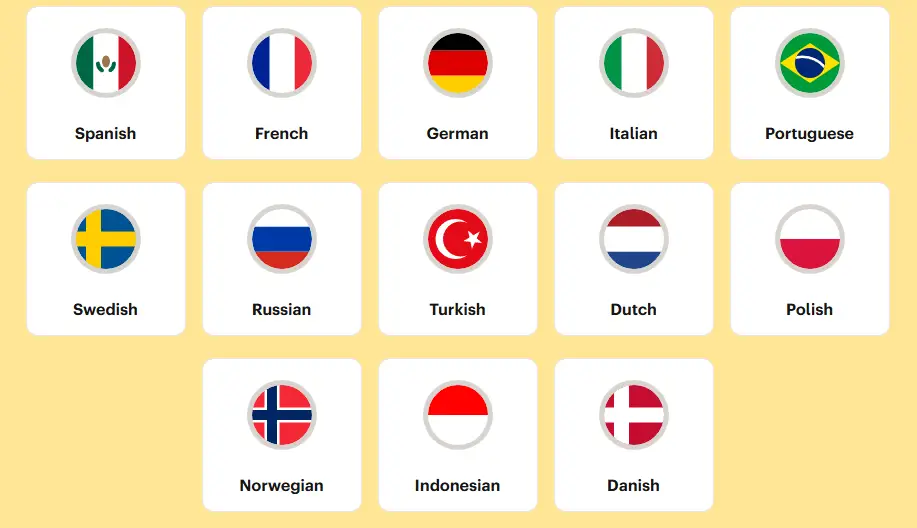
- Spanish (Latin America)
- Spanish (Spain)
- French
- German
- Italian
- Portuguese (Brazilian)
- Dutch
- Russian
- Polish
- Turkish
- Norwegian
- Danish
- Swedish
- Indonesian
Each language course is carefully designed for beginners to intermediate learners. The lessons focus on real-life conversations, cultural tips, and correct grammar.
For example, if you’re learning French, you’ll not only study words and phrases, but also learn how people actually speak in France.
Unlike some other apps that offer hundreds of languages but with basic lessons, Babbel focuses on quality. It makes sure each language course is full of useful content and teaches you how to use the language in real situations.
Can You Learn English with Babbel?
Yes, but only if you use Babbel in one of these languages: German, French, Spanish, Italian, Portuguese, Polish, Swedish, or Ukrainian. To start, change the app’s display language, then choose English as your course.
If your first language is not on that list, Babbel cannot teach you English yet. Instead, try one of these best English learning apps, such as Duolingo or Busuu.
User Experience: Is Babbel Easy to Use?

Yes, Babbel is designed to be very easy to use—even if you’re just starting out with language learning. Its clean and simple layout makes it easy to find lessons, track your progress, and stay motivated.
🎯 Simple and Clear Interface
When you open Babbel, you’re greeted with a friendly dashboard. It shows your current course, how far you’ve gone, and what lesson is next. There’s no clutter or confusion—just a clear path to follow.
This makes it perfect for younger learners or anyone who prefers a step-by-step approach.
📱 Available on Desktop and Mobile
Babbel works smoothly on both computers and mobile devices. You can switch between them anytime, and your progress stays saved. So, whether you’re learning on your phone during a bus ride or on your laptop at home, Babbel fits right into your routine.
🧩 Bite-Sized Lessons
Each lesson takes about 10 to 15 minutes, making it easy to fit into a busy day.
The app uses a mix of reading, listening, writing, and speaking, so you don’t get bored. You also get instant feedback, which helps you learn faster and fix mistakes right away.
🔄 Easy Review System
Babbel includes a smart review section that helps you go over what you’ve already learned. This helps you remember words and phrases better, especially if you haven’t used them in a while.
👂 Voice and Audio Clarity
The app uses native speakers in its audio lessons, so you hear the language exactly as it’s spoken in real life. Plus, with the speech recognition tool, you can practice speaking and get corrected on the spot.
In short: Babbel makes language learning simple, friendly, and fun. You don’t need to be a tech expert or a grammar pro. Just log in, follow the lessons, and learn quickly.
How Much Does Babbel Cost?
Babbel is not a free app. You can try the first lesson of every course for free, but you need a subscription to keep learning. Prices change often because of promotions.
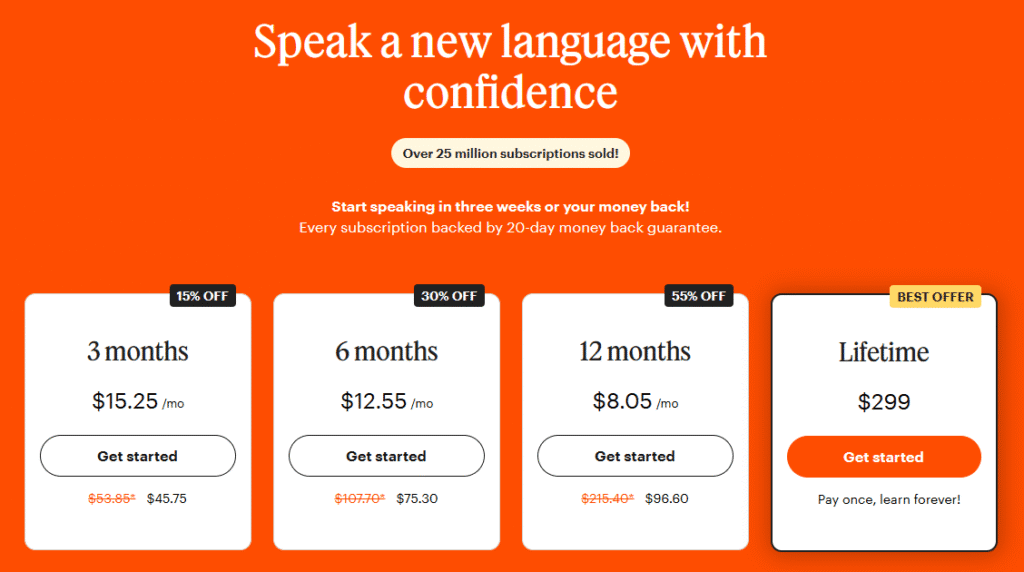
Babbel currently offers single-language plans (1, 3, 6, or 12 months), an all-language Complete plan, a one-time Lifetime plan, and Babbel Live for online classes with teachers.
Pros and Cons of Babbel
After spending time learning German with Babbel, I noticed several strengths as well as a few drawbacks. Here’s my honest breakdown:
Pros
- Real-Life Conversations
- Short and Easy Lessons
- Great Grammar Support
- Practical Vocabulary
- Affordable pricing
Cons
- Limited to 14 Languages
- Subscription-Based No Free Tier Beyond Trial
Who Is Babbel Best For?
Babbel is a great choice if you want to learn a new language in a simple, practical, and time-saving way. It is built around real-life situations, so it suits people who want to speak and understand the language, not just pass tests.
Here are the types of learners who benefit the most from using Babbel:
👶 Beginners and Intermediate Learners
If you’re just starting or have some basic knowledge, Babbel helps you build strong skills step by step. It’s not too fast or too complicated, so it works well for motivated beginners and intermediate learners.
🌍 Travelers
Going on a trip? Babbel teaches practical phrases you’ll need at the airport, in restaurants, or while asking for directions. You can quickly learn what you need in just a few weeks of short daily lessons.
🕒 Busy People
Don’t have much time? No problem! Each lesson is only about 10–15 minutes long, so you can squeeze in language practice even with a packed schedule.
🧠 Self-Motivated Learners
If you enjoy learning at your own pace and like doing things independently, Babbel works really well. You don’t need to wait for a teacher—you can just log in and start learning.
🎯 Goal-Oriented Learners
Whether you want to pass a class, prepare for a trip, or start speaking with friends or coworkers, Babbel helps you set clear goals and track your progress as you move forward.
Maybe Not Ideal For:
- Advanced learners who want deep grammar rules or advanced vocabulary.
- Kids under 13, as the content is more suited for teens and adults.
- Learners who prefer live teaching or one-on-one tutoring (unless using Babbel Live, which may not always be available).
In short, Babbel is best for curious minds who want to speak a new language confidently without feeling overwhelmed or bored. If that sounds like you, Babbel is worth a try!
Final Verdict: Is Babbel Worth It?
After using Babbel to learn German for several weeks, I can say it’s one of the most practical and well-structured language apps I’ve tried. It isn’t flashy, and its strength is in clear lessons, real-life vocabulary, and easy grammar explanations.
I started as a complete beginner, and within a month, I could introduce myself, order food, ask for directions, and understand simple sentences.
The short, focused lessons made it easy to stay consistent, and the speech recognition feature helped me feel more confident speaking out loud.
So, is Babbel really worth your time and money? The short answer is yes—especially if you’re a beginner or intermediate learner looking for real-world language skills.
Babbel makes language learning simple, practical, and enjoyable. Its short lessons, speech recognition, and grammar support give you the tools to start speaking confidently, and its courses are written by language experts.
Sure, it’s not perfect. It might not be the best fit for advanced learners or people who want full live instruction (unless you use Babbel Live).
But for most people—especially students, travelers, and busy adults—it’s one of the most balanced and affordable options out there.
⭐ Our Rating: 4.5 out of 5
Babbel is worth it if you’re serious about building a solid foundation in a new language—especially if you appreciate structure, clarity, and learning at your own pace. For me, it turned learning German from a challenge into an enjoyable daily habit.
Babbel is ideal for:
- Beginners and intermediate learners
- People who want to speak a new language, not just read it
- Learners with limited time
- Anyone who wants quality lessons without feeling overwhelmed
If you’re serious about learning a new language, Babbel is definitely worth a try. And since the first lesson is free, you’ve got nothing to lose by checking it out.
Frequently Asked Questions
Is Babbel free to use?
No. You can try the first lesson of every course for free, but you need a paid subscription to keep learning.
Can I learn English with Babbel?
Yes, if your app language is German, French, Spanish, Italian, Portuguese, Polish, Swedish, or Ukrainian. Switch the display language, then pick English as your course.
Can I get fluent with Babbel?
Babbel builds strong conversational skills at beginner and intermediate levels. It probably won’t make you fluent on its own, but it is a great way to start speaking with confidence.
How many languages can I learn with Babbel?
Babbel teaches 14 languages in total, and English speakers can choose from 13 of them. A single-language plan covers one course; the Complete and Lifetime plans include all of them.
How does Babbel compare to Duolingo?
Babbel focuses on real conversations, grammar, and structure, while Duolingo uses a game-like approach with points and streaks. Duolingo has a bigger free version; Babbel suits learners who want more guided lessons.
Can I cancel my Babbel subscription?
Yes. You can cancel any time, and you keep access until the end of the period you paid for. Refund rules depend on where you bought the plan, so check Babbel’s Help Center.
Related Articles

- Synecdoche: Meaning, Pronunciation and Examples - October 20, 2026
- Metonymy: Meaning, Types and Examples in the News - October 20, 2026
- Figures of Speech: Meaning, Types and Examples - October 19, 2026